1.MD.2:
Measurement And Data
Measure Lengths Indirectly And By Iterating Length Units.
Express the length of an object as a whole number of length units, by laying multiple copies of a shorter object (the length unit) end to end; understand that the length measurement of an object is the number of same-size length units that span it with no gaps or overlaps. Limit to contexts where the object being measured is spanned by a whole number of length units with no gaps or overlaps.
2.G.1:
Geometry
Reason With Shapes And Their Attributes.
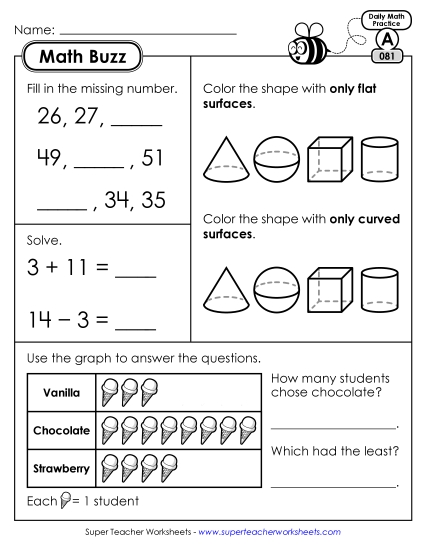
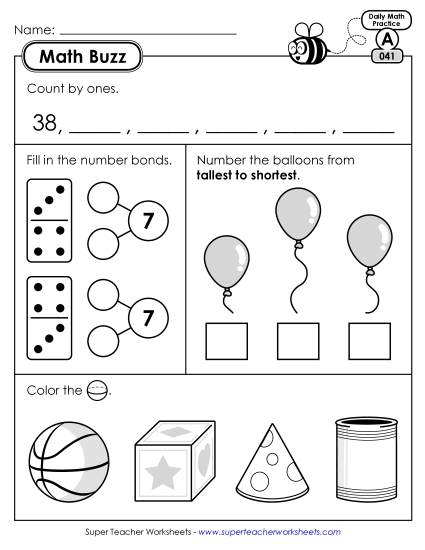
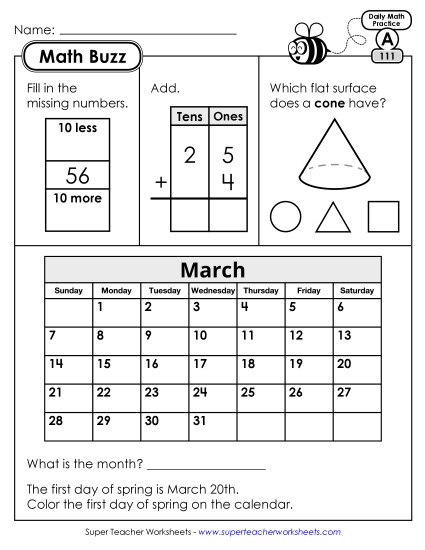
Recognize and draw shapes having specified attributes, such as a given number of angles or a given number of equal faces.5 Identify triangles, quadrilaterals, pentagons, hexagons, and cubes.
1.MD.4:
Measurement And Data
Represent And Interpret Data.
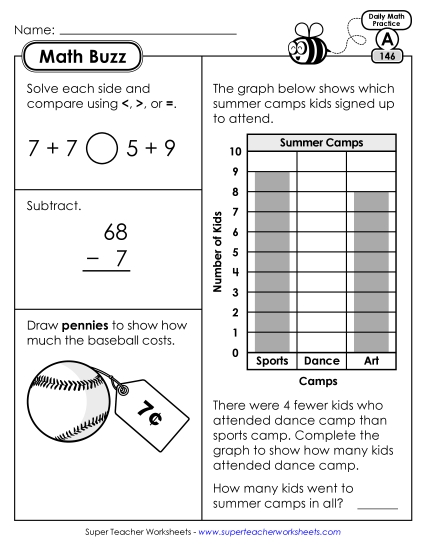
Organize, represent, and interpret data with up to three categories; ask and answer questions about the total number of data points, how many in each category, and how many more or less are in one category than in another.